

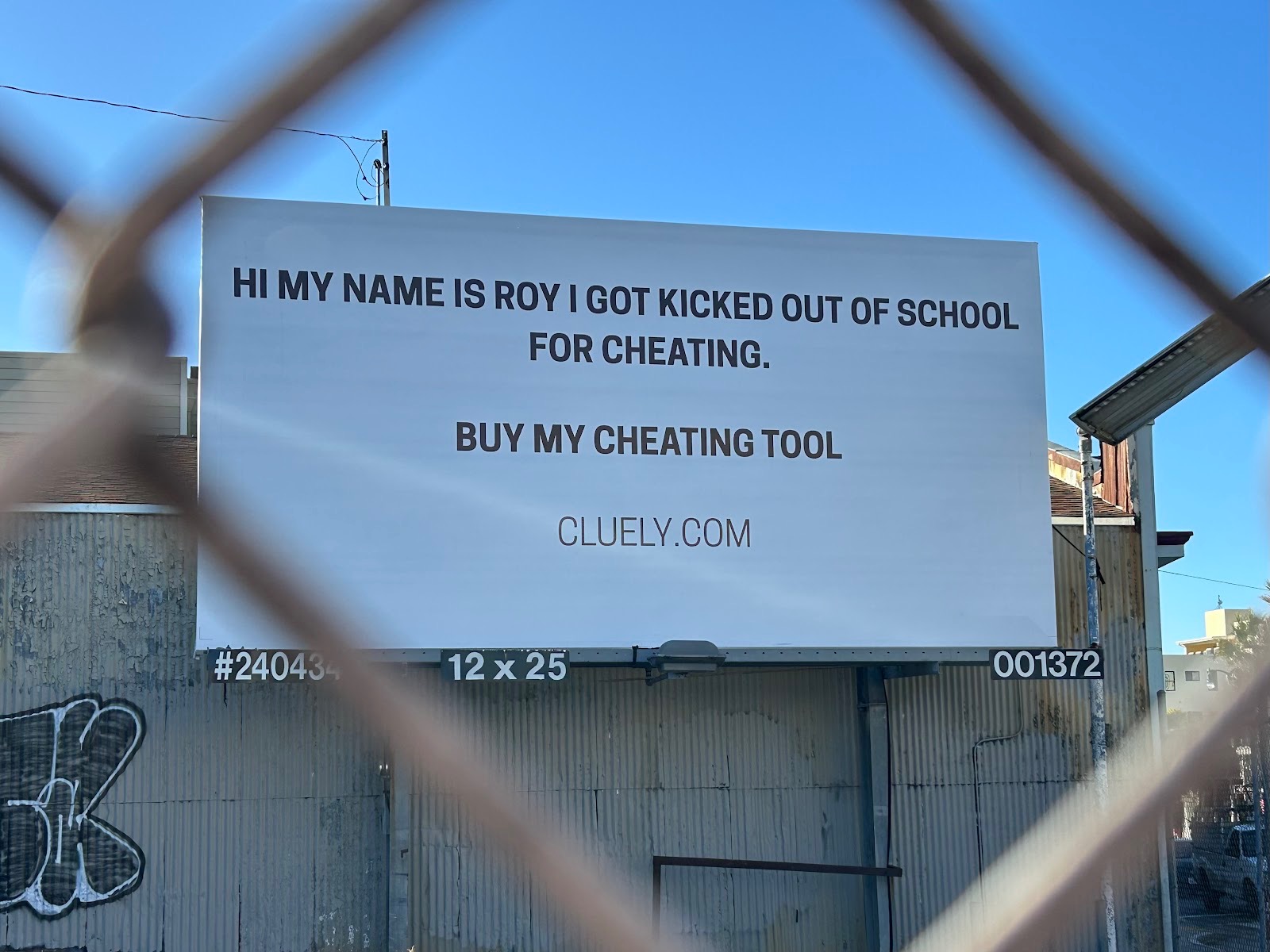
Cluely, a contentious new AI startup promising smarter tools for classrooms, launched in April 2025, bringing with it a bit of a commotion from its users.
The company, led by its bold CEO, Chungin Lee, has leaned into marketing itself as “the ultimate tool for finishing homework fast,” and has risen to become a prominent topic of debate among many. While some call the approach refreshingly honest, others see it as little more than selling a shortcut.
Cluely is an AI driven platform designed to generate answers and explanations for assignments in seconds. Unlike more common educational technology companies, Cluely has leaned into a more provocative image, branding itself as an option for students who simply want results.
Viral TikTok advertisements have boosted the message, presenting the app less like an academic aid and more like a cheat code for those under pressure.
“I get why people want to use it,” said Rachel Gerke ’27, “But if we start letting AI do all the thinking for us, it can be really easy to fall into a pattern of using it. Having an AI that’s geared toward that mindset won’t be productive in the long run.”
Educators say that AI can in fact support student learning when used responsibly. Brainstorming, organizing thoughts, and editing are all areas where the technology shows great promise; the trouble comes when students use it to dodge the thinking process altogether, and become dependent on the extra help.
“It’s like paying someone else to work out for you,” said Academic Dean Chris Fern. “You can see it happen, but your own muscles won’t get stronger. Our brains work the same way.”
The company’s frat style branding has drawn as much attention as the technology itself. Promotional videos featuring bold slogans like “cheat on everything” have spread widely online, attracting curiosity and concern.
Supporters argue the strategy deals with growing student frustration with rigid academic systems, while critics warn it risks encouraging shortcuts over putting in the effort. Cluely’s CEO has positioned the app as an act of rebellion, often describing it as a direct challenge to traditional AI models.
Tech Director John Wu stated, “Startups can push boundaries, but schools can’t afford to let marketing gimmicks decide how kids think about learning.”
Cluely’s launch has contributed to a larger debate now unfolding in classrooms nationwide. The question of how schools should respond to AI tools that are both powerful and extremely tempting has struck teachers around the nation, leaving many wondering how to overcome this burgeoning issue.
Wu commented startups like Cluely are part of a bigger “gold rush” moment. “The keyword ‘AI’ tends to add more zeros to the price tag,” he noted. “These startups bring fresh ideas, but schools still face hurdles like privacy, cost, and training. Without careful planning, AI can cause more confusion than help.”
Despite the controversy, few doubt that AI will continue pushing itself into daily life. Whether Cluely turns out to be another great tool or a cautionary lesson remains to be something for the future.
For now, Cluely has begun to stir the pot, one controversial billboard at a time.


