
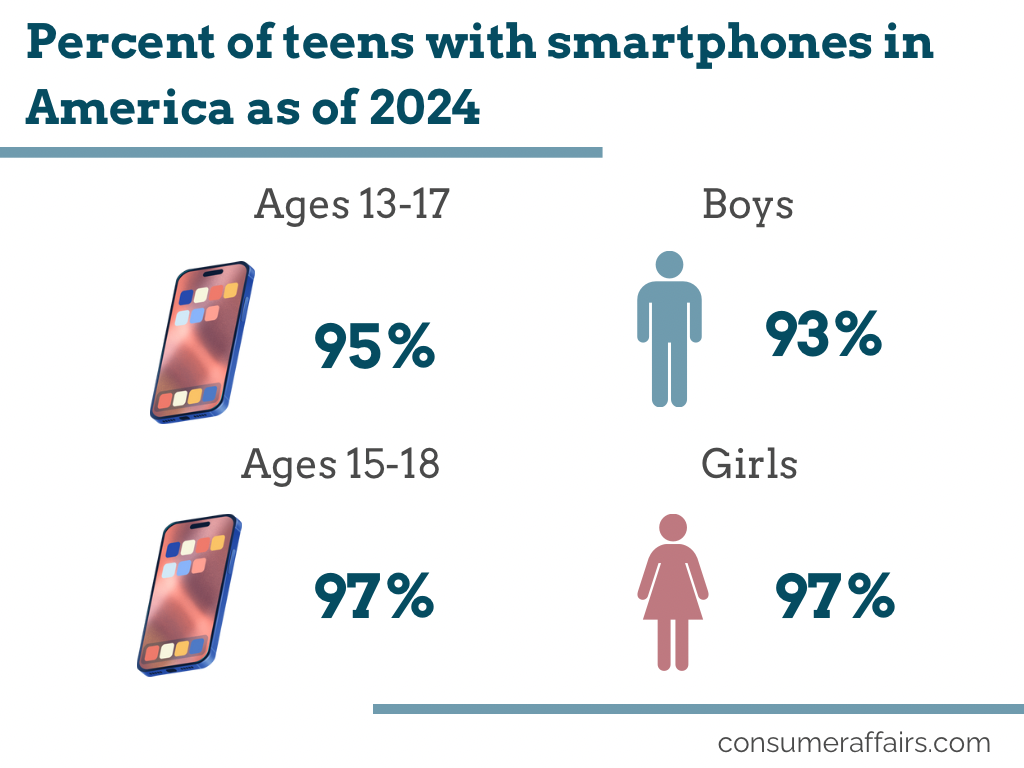
Only 15 years ago, in 2011, the average age for a child to gain ownership of a phone was around 15-17 years old. Now, children are owning phones before they even finish elementary school at around 10-11 years old, according to Pew Research Center.
Whether it may be due to safety, entertainment, distraction, or convenience, there is no denying that in recent years parents have opted to give their children phones at a noticeably younger age. Many parents see this as a positive, while some teenagers are actually viewing it as a negative effect on our society.
Olivia Veroy ’27 said, “Children may be introduced to harmful ideas that their parents aren’t able to shield them from once they get a phone.”
While internet safety is an obvious concern, scientists are still finding out new information about how screens and devices are affecting everyday lives and health. An immense amount of screen time can lead to behavior issues and strong emotions in children and teenagers.
Human brains are not designed to multitask because people do not have the energy to send so many different signals to each part of the brain and body. So, when a child is around 10-12 years old, which is during the necessary developmental stages, having a phone and being forced to multitask constantly may disrupt this process.
Psychology teacher Jackie D’Angelo explained, “Children’s brains are more plastic or able to be molded to new stimuli. Plastic brains are adaptable to new environments but over time, brains become more hardwired to particular neural connections which creates standardized behaviors.”
She continued, “People who are introduced to phones and social media as adults already have been conditioned to have conversations in person and prioritize those… Children who were raised with this technology were raised to be in constant communication with their own tasks interrupted by notifications.”
Being in constant communication with one’s peers evokes a high level of psychological stress in teenagers.
The responsibility of maintaining friendships and relationships not only in person, but now online, is a new aspect that teenagers today have to learn to navigate, which can be difficult for such a young person.
D’Angelo explained that there are many factors that can impact the development of anxiety, depression, and other disorders and owning a phone at a young age can be one.
Because this age is such a crucial time for teenagers to develop their identity and learn more about themselves on a deeper level, having full access to the internet and constantly being connected could be detrimental to their mental health.
Isaac Haymaker ’27 stated, “Having a phone at a young age can be very harmful to mental health and can affect social skills.”
While phones are continuing to be a part of everyday lives, the growing concern for how they affect people as a whole in the long run is prevalent. Even more so, how they are currently affecting teenagers and children’s health raises concern. Although smartphones can provide the world with communication and safety, they still offer notably damaging effects to young lives.


