In the year 2000, the International Space Station achieved a feat believed to be impossible: permanent human residency in space. For 25 years, the station has prospered, hosting tourists, facilitating experiments, and setting a foundation for scientific study.
The International Space Station began as a program involving multiple countries: the United States, Canada, Japan, Russia, and multiple European countries.
During its two construction phases, the space agencies sent shuttles, contributed materials and resources to create the station, and provided astronauts and engineers to make the International Space Station a reality.
On Oct. 31, 2000, Bill Shepherd of NASA along with Russia’s Sergei Krikalev and Yuri Gidzenko, launched from Kazakhstan. The launch succeeded and the three proceeded to live on the station for five months, making the place amicable to all.
One word describes the International Space Station: unity. In addition to multiple countries collaborating to create the station, the station hosted over 290 people from 26 different countries during its 25 years, with seven countries currently at the ISS now.
Numerous expeditions and experiments have been conducted, using its many labs and functions to the fullest. For instance, the station created the Alpha Magnetic Spectrometer to scan for cosmic rays, and tested various Earth technologies in space, such as testing tissue chips in microgravity.
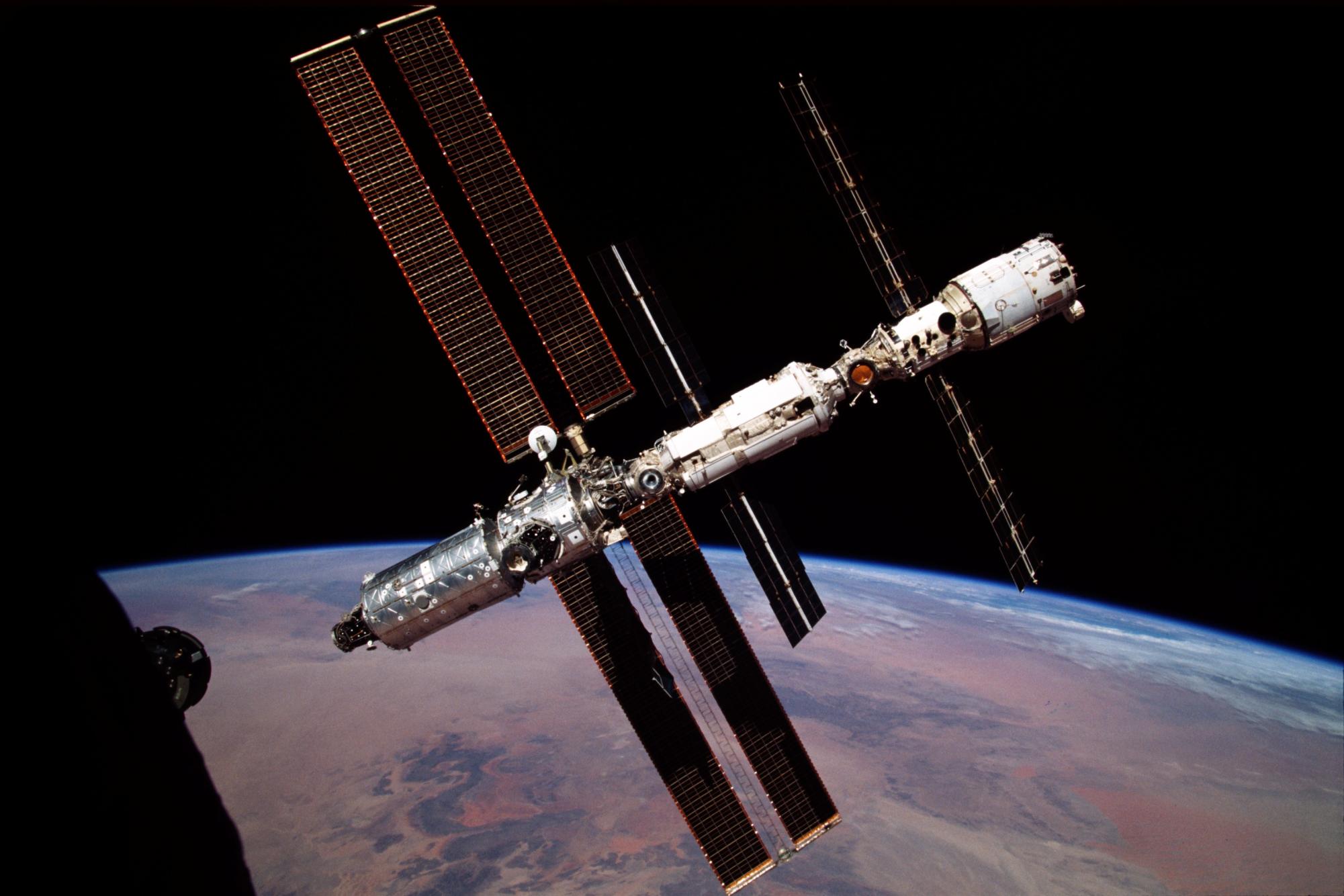
For that reason, Jerard Loyola ’26, president of Archbishop Riordan’s rocketry club, sees the station as “fascinating,” and a “symbol of human ingenuity.”
Unfortunately, despite its greatness, the International Space Station carries large problems: cost and age.
Stuart Kaler, physics teacher at Archbishop Riordan, commented, “There’s a good deal of maintenance costs… send[ing] up capsules now and again [with] the basics, food stuff, resupply it with water… it’s a costly venture.”
Furthermore, NASA explains that originally designed parts still exist at the station’s core; these parts were only built for a 30-year life cycle, which ends after 2030.
Continued use of the parts could result in serious danger for the spacecraft. Therefore, with help from Space X, NASA plans to de-orbit the station in 2031, bringing the station back to Earth.
Loyola looked toward the future, exclaiming, “The space station… happened because people of different cultures…were all willing to come together and collaborate on this big dream… if NASA can really build on that unity… then we’d be able to go further.”
After the International Space Station’s de-orbit, NASA looks to allow private industries to develop new stations, whilst preparing future exploration missions to Mars.
The end of the International Space Station will mark the end of an era, but it may be the beginning of something new, something astronomical.