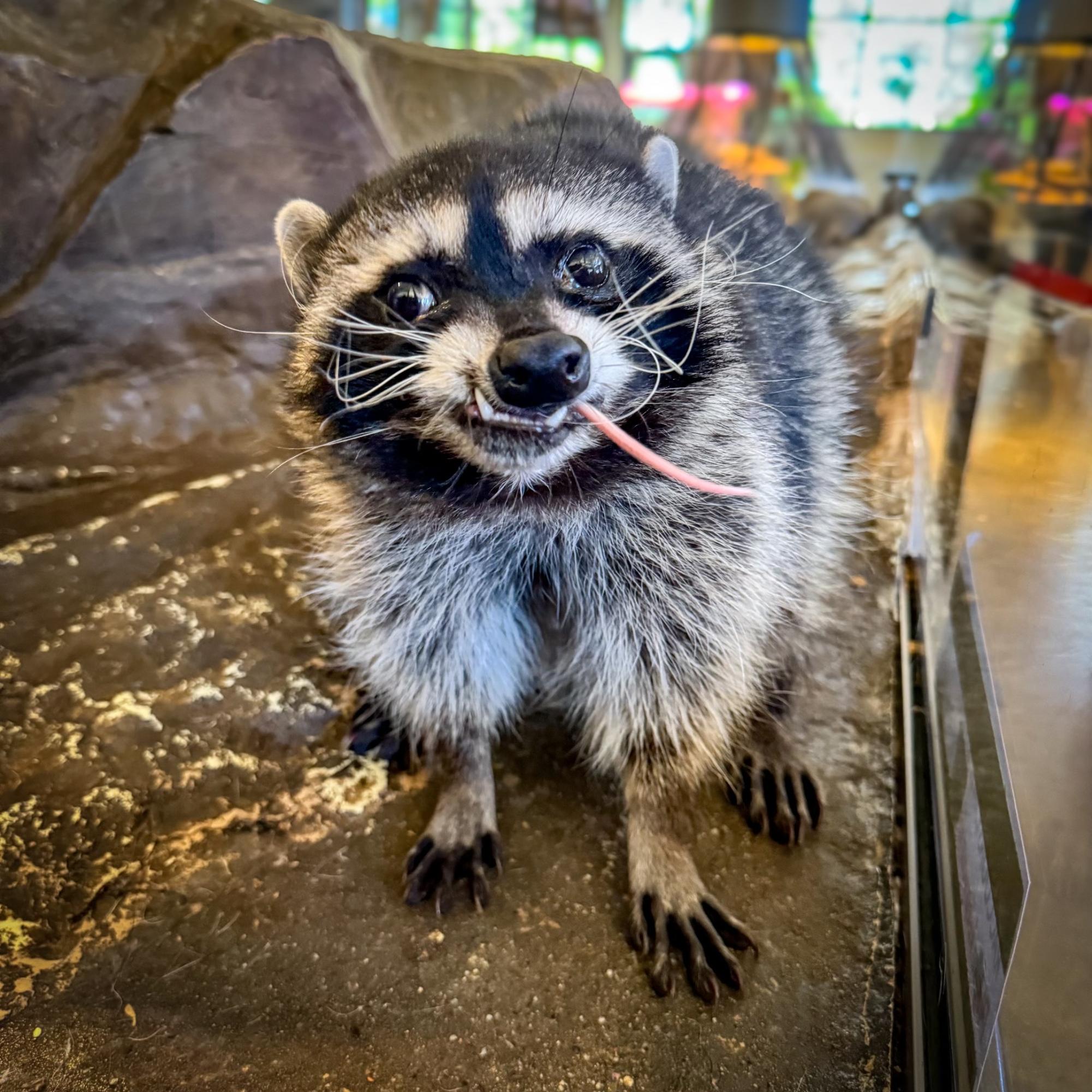
Lyra, the resident raccoon at the Randall Museum, smiles for the camera.
On a typical walk through San Francisco, you will most likely see dogs, maybe a cat on a stroll, or even a tortoise walking the hills of the West Portal neighborhood.
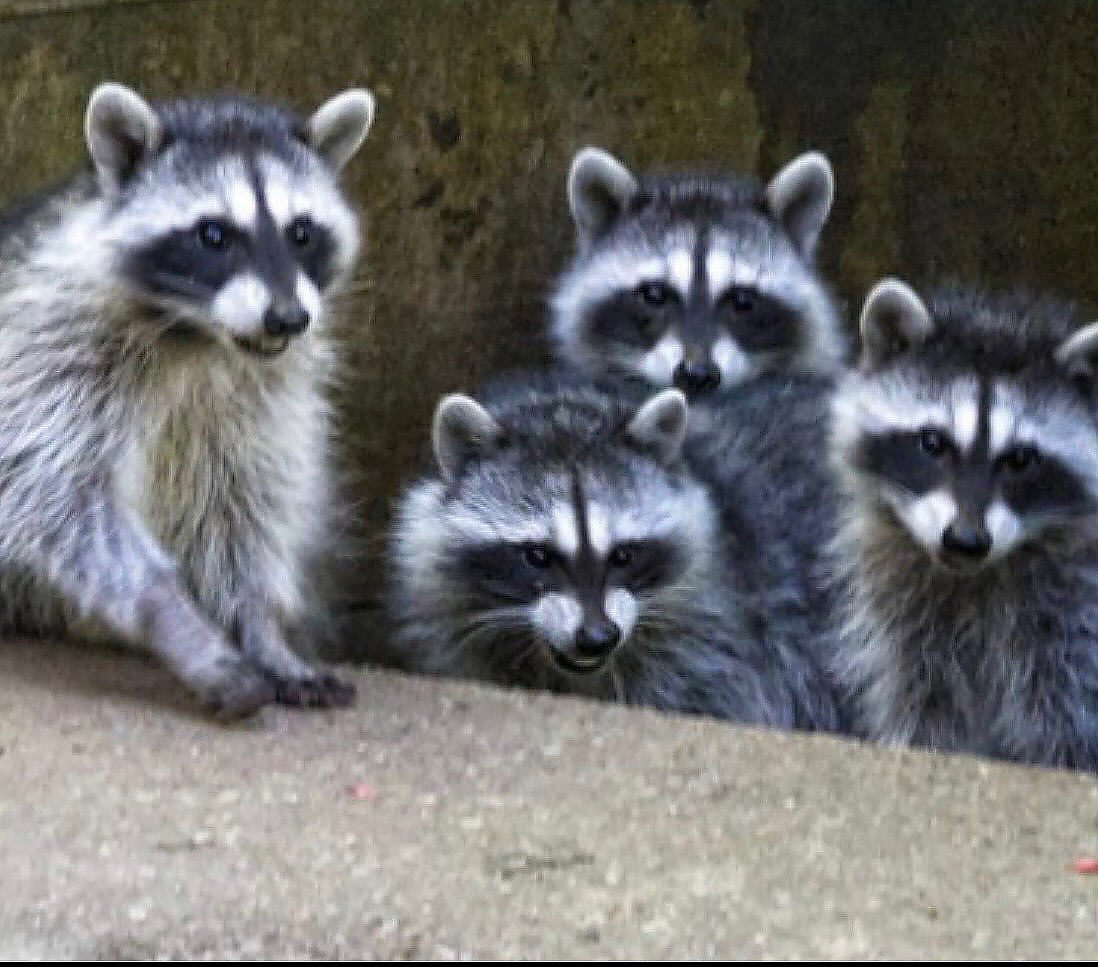
But, one new animal joining the bunch is the infamous black, gray, and white, furry trash panda–otherwise known as a raccoon.
Along with their defining characteristics of little grubby hands, bandit masks, and a big, fluffy, ringed tail, the size of their snouts is becoming a new characteristic defining their domestication.
Domestication syndrome, often found in animals like dogs, cats, goats, and rats, is when phenotypic (visible) traits like depigmentation, floppy and/or reduced ears, shorter muzzles, smaller teeth, docility, and more become increasingly common in species.
AP Environmental Science teacher, Michael O’Brien, commented that, “It’s important to distinguish domestication in terms of people keeping them as pets, and then turning them loose whenever they feel like they don’t want them anymore. Domestication is also where you can have wild animals like deer, which nobody could ever keep as pets. Yet, because they’re so domesticated and because they are so used to being around human beings–they’ll come and eat your rose garden.”
Urban raccoons are found to have a reduction in snout size, with a study finding that raccoons in urban areas have a 3.56 percent snout reduction in comparison to raccoons in rural areas. Live Animal Exhibit Manager at the Randall Museum, Zach Lim, commented that he “think[s] that’s kind of a farce. I think they’re basing off a different study with a fox in the fur trade, and it doesn’t translate very well with raccoons. I think they’ve become accustomed to living around humans just because we’ve encroached on their habitat for so many years now.”
Sightings of these “trash pandas” are abundant in areas like the Presidio and Golden Gate Park, and generally throughout the city.
San Francisco resident and Spanish teacher, Armando Castillo, said, “We need to live and interconnect alongside nature, not eliminate it, not destroy it. They [raccoons] were here longer than people were here, they should be here, with us.”
With this domestication of raccoons, a very important question arises: could raccoons be pets?
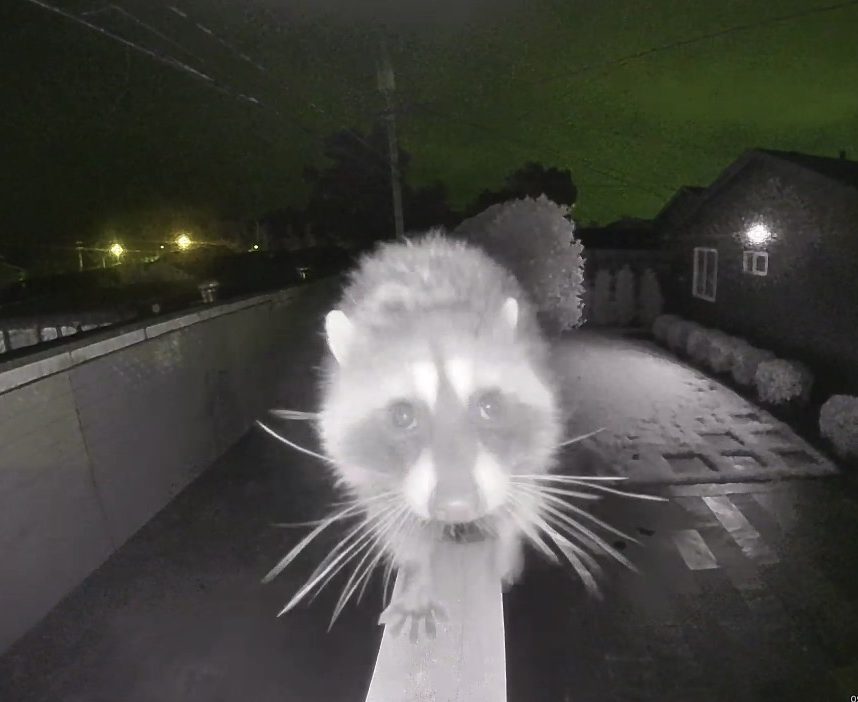
A raccoon visited a local neighborhood yard.
In states such as Arkansas, Florida, Illinois, New Jersey, Ohio, Oklahoma, South Dakota, Tennessee, and Wisconsin, owning a raccoon is legal–with the exception of needing a permit and/or the raccoon being from a USDA-licensed breeder in most of these states.
Although their utterly cute fluffiness may be hypnotizing, having a raccoon as a pet does come with some drawbacks. AP Biology teacher Colleen O’Rourke explained, “They have very sharp teeth and are also prey to other animals. So, that could give them a very strong defense behavior, which could make them bite and scratch more than dogs and cats.”
Having a raccoon as a pet is not the most realistic option for most people, nor would it be the safest move due to their wild nature.
One of the safer ways to “aww” at a raccoon is at the Randall Museum. Located in central San Francisco, it is home to a female 3-year old raccoon named Lyra.
Weighing in at 11-12 pounds, this raccoon, born with a crossed jaw with an overbite, an inwards- domed skull like a pug, and three- fused vertebrae in her spine, was found abandoned by her mother in Santa Cruz.
“She’s a real special raccoon, if people want to have a pet raccoon–they shouldn’t–they should just come here [Randall Museum] and see what a raccoon is like,” said Lim.
The domestication of raccoons in urban areas will continue to be studied, with the possibility of raccoons being a more popular pet. To be noted, the ownership of a raccoon is illegal in California, with fines up to $10,000.