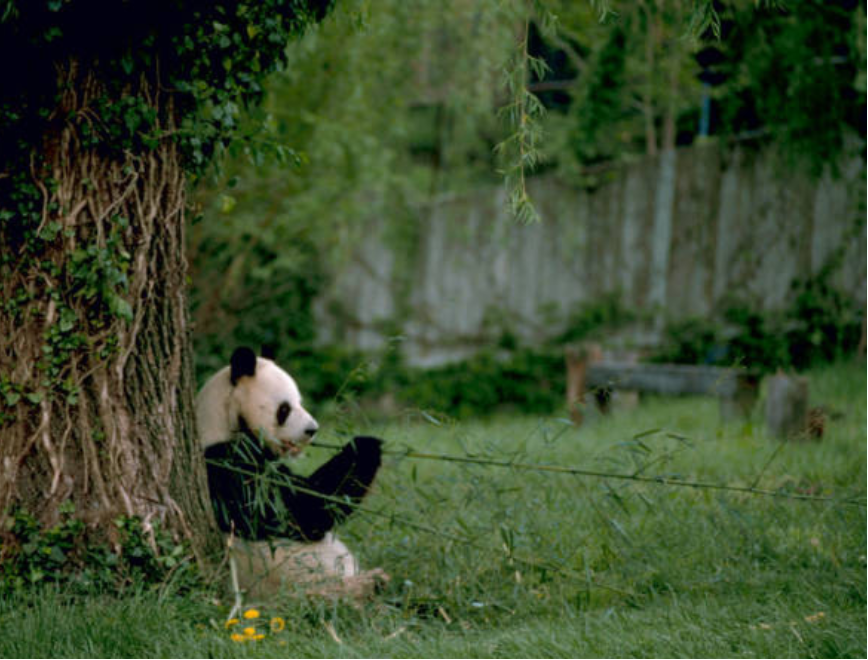
The lush forests of Central China captivate a team of wildlife researchers as they embark on an expedition searching for something small. As they scan walls of bamboo, they come across fresh bite marks. In great anticipation, the researchers search for more signs of the beast, and soon enough, they come across panda dung.
Their search is complete. The pandas are back.
As far back as the 1970s, giant pandas were critically endangered with only around 1,000 pandas left in the wild. Wildlife agencies such as the World Wildlife Fund for Nature (WWF) funded multiple conservation efforts to restore the panda population.
According to the International Union for Conservation of Nature (IUCN), the species was reclassified from “endangered” to “vulnerable” after noticing a 17 percent increase in population throughout the world.
Recently, as of 2025-2026, continued signs of recovery are present, as the panda’s population is now approximately 2,700 individuals.
The Giant Panda is a beloved national icon known for its thick black and white fur, round belly, and stocky body; moreover, the creature serves as a national symbol for wildlife conservation. However, a vital question remains: if an animal is considered to be “recovered”, are they not susceptible to any threats anymore?
That is not the case. Ron Swaisgood, director of applied animal ecology at the San Diego Zoo Institute for Conservation Research and chair of the IUCN’s Giant Panda Expert Team, emphasized that recovery does not mean complete safety. “While we do not believe the giant panda is completely safe, our IUCN Red List evaluation highlights how far we have come in panda conservation,” he said.
In California alone, over 300 plants and animals are currently endangered, with U.S. data showing over 200 species listed under the Endangered Species Act (ESA). Habitat loss, poaching, pollution, overexploitation, invasive species, and disease are some factors that significantly harm animals and cause extinction.

Of them, habitat loss caused by urbanization has become the leading factor of destruction. If a species loses its home, their chances of sustainability becomes increasingly slim to adapt and survive in a new environment it has fled to. Therefore the creature is more susceptible to death.
Furthermore, an imbalance in the ecosystem causes chain reactions of confusion in the environment, triggering ripple effects throughout the biosphere. To combat this from happening, there have been solutions presented and suggested by a wide array of people who wanted to make a difference. One way is to advocate for selective cutting, which is a sustainable forest management method that removes trees solely based on species, age and health rather than external factors which leads to deforestation.
Yet environmental threats aren’t limited to poaching or disease; additionally, public perception plays a role. With the rise of globalization and internet access, people have become ignorant to what is happening in our world.
“As is often with society, we are more drawn to drama and shocking news rather than positive stories. As a result, not many people are tuning in to hear the most recent good news about wildlife,” said Darwin Hernandez ’26.
Additionally, Noah Santiago ’26 made a point about how living styles have completely changed from people now compared to their ancestors, reflecting on what it means to value the resources we are given on earth.
“We have come to the point where survival for living is not as much of an issue as before and we lose track of how much we take from the environment,” he stated.
It is important to take care of animals such as giant pandas, because they run the ecosystem, which affects humans. The Giant Pandas play a pivotal role in its forested terrain by spreading seeds in their waste that allow vegetation to thrive. Consuming bamboo 16 hours a day which equals to 26-28 pounds of bamboo sticks daily, they prevent overgrowth of a single species; therefore, pandas help regulate the ecosystem.
They are classified as umbrella species, which are animals whose conservation indirectly protects other species sharing their habitat.
In the forests where bamboo towers overhead, the return of the giant pandas is both a triumph and a warning: conservation doesn’t end with recovery-it begins again.
Timeline: https://www.timetoast.com/v/b4f97fb9-b0df-4b52-9864-7c0962648c8f