1776, Pennsylvania State House.
The 56 delegates took their stances, literally and metaphorically, and gathered in the Assembly Room beyond the red-brick walls.
As the elevated table overlooked circular desks and 13 tables, complemented by Windsor chairs and green, woolen cloths, a major document needed approval.
This document, a large parchment sheet, was discussed a week earlier. And still dissatisfied with British policies, the group approved its final draft on that day. That large parchment sheet is now known as the Declaration of Independence.
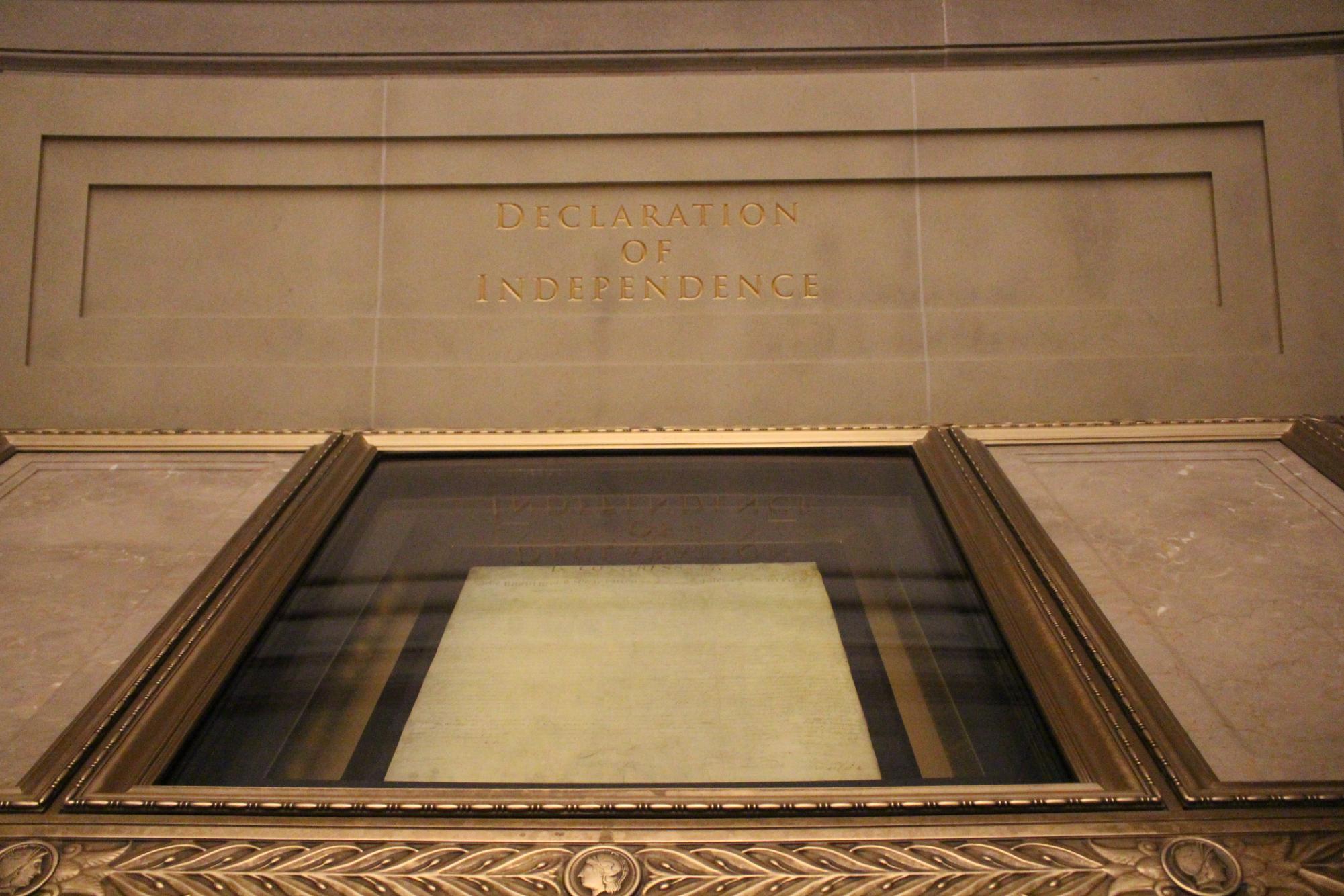
The Declaration of Independence is now in the National Archives in Washington, D.C.
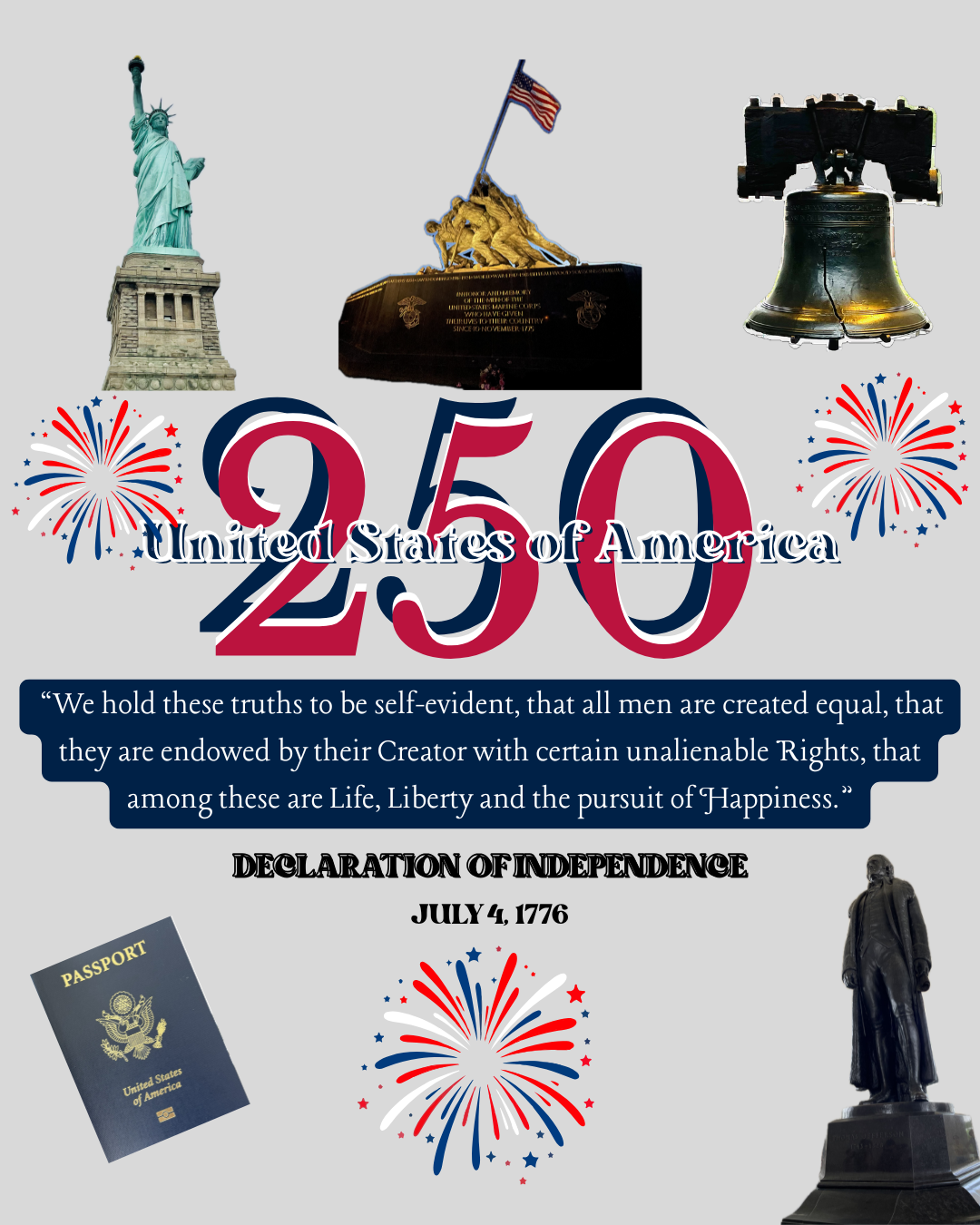
Americans will celebrate the 250th anniversary of the momentous event on July 4.
“We have accomplished a lot in 250 years. We created a huge economy that has been the envy of the world and this has afforded us a lot of privileges in our country,” AP United States History teacher Cory Nelson said. “Our education system… has allowed us to be the leading country for science and technology. We created a blueprint for constitutional democracy around the world. To just name a few things.”
Major activities and parades will take place throughout the year across major cities like Washington, D.C., Los Angeles and New York. American embassies are also hosting celebratory events.
San Francisco will mark the occasion with a fireworks show from Golden Gate Bridge at 9:30 pm, the third time in its history. The first and second times were for the bridge’s 50th and 75th anniversaries.

“My great uncle helped to build it, my grandparents were there when it opened in 1937, and I attended the 50th and 75th anniversary festivities,” SF Stories teacher, Susan Sutton, MJE, revealed. “That bridge, to me, represents freedom, hope, and most of all, home.”
Two additional firework displays will start from Aquatic Park and PIER 39 at the same time.
“I hope the organizers have taken into account the environmental factors. Humans are not the only ones who live here,” Sutton said.
Restaurants, activities and retail shops in Fisherman’s Wharf will remain open.
“At my cabin… the kids would do watermelon eating contests, three legged races, and water balloon [and] egg toss competitions,” Mackenzie Whitted ’28 said, reminiscing on an old July 4 tradition. “Now, I’m always with [my] family enjoying the night, watching it glow with the fireworks… my favorite part is going on my cousin’s roof with blankets and food to watch the fireworks shows.”
The 21-week-long America Discovery 250 Relay is carrying a copy of the Declaration of Independence across the country and will cross the bridge on July 4, according to america250.org.
“This is a top holiday because for one day, we can put aside our politics and come together as Americans,” Nelson said.
This year is not only the 250th birthday of the United States. June 27 also marked the 250th anniversary of the first travelers settling in San Francisco, arriving the week before the Declaration’s approval.
“San Francisco has remained true to the spirit of adventure that inspired people to come here from all over the world in search of gold, or more simply, a new beginning,” Sutton said. “As the decades have rolled by, the treasures have changed. Today, many come here for financial prosperity, but also cultural diversity and education.”
“Still, we have to remember that there were people here before us, and there will be people here after us,” Sutton continued. “We share a great responsibility with the native peoples and our ancestors to ensure that San Francisco is always a welcoming place.”
Sutton feels affordable housing and cost of living continues to be an issue.

“Generations of San Franciscans… can no longer afford to live here,” she said. “When governments start considering building housing specifically for educators, that is a clear indication that something is very wrong with the economy, and frankly, our priorities.”
Additionally, the holiday carries extra meaning for people also born on July 4, like Jack Hsiang ’29.
“Some decorations from my previous birthdays have been American-themed, and we sometimes see fireworks if we are able to,” he said.
The American Revolution led to major developments. It inspired subsequent fights for independence around the world.
Technology rapidly improved during the Second Industrial Revolution, and the country was prosperous following the world wars.
The country emerged as the sole global superpower after the moon landing and winning the Cold War, representative of its international presence. Many people also immigrate to the U.S. for its opportunities.
“I have been fascinated with the fact that [people from] many other countries immigrated here to live better lives,” Hsiang added. “By being made up of a wide variety of races and cultures, that is one thing that sets our country apart from all the others.”
However, the U.S. has also been shaped by the enslavement of African Americans, displacement of Native Americans, internment of Japanese Americans, civil rights movement, anti-immigration stances, interventions in the Middle East, and the fight for women’s equality. These have been among the defining issues of the past couple centuries.

Martin Luther King, Jr. fought to ensure that the rights established by the Founding Fathers in the Declaration of Independence were extended to all Americans.
“Women’s, minority, [and] immigrant rights have been fought over since the creation of our country,” Nelson explained. He believes in making things equitable, especially for families trying their best to raise their children. He hopes that in the next 250 years, “we all work better TOGETHER to make our country fair for everyone.”
“We have done some bad things in our history and we shouldn’t shy away from them, but acknowledge them, so they don’t happen again,” he added. “…When life is difficult, you tend to focus on getting out of that difficulty and then you might focus elsewhere, and I feel like that is happening now.”
The success of professional sports teams like football, baseball and basketball, as well as Hollywood and Silicon Valley, complement its rich history and culture.
“I love being an American because of the ideals we have. Freedom. For the most part we can choose what we want to do, what to say… a lot of other countries are censored,” Nelson said. “I love baseball. I love traveling to other states and knowing that regionally we are different, but there is always a familiarity with other Americans. I love free refills on soda, and I love free water in restaurants.”
“You always have to fight physically or metaphorically for freedom and independence,” he continued. “What are you willing to give up to get independence?”